
Finding Brushy Creek Residents
Brushy Creek has no single municipal roster because it is an unincorporated Census Designated Place within Williamson County. A property owner may appear in the appraisal roll, a party may appear in a deed or court index, and a past household may appear in a library directory. Those are separate facts. For a current property connection, start with the address and the Williamson Central Appraisal District record. For an older household, start with the year and the library collection. A mailing city can be Round Rock, Cedar Park, or Austin even when the parcel is in Brushy Creek.
Build the search trail from the strongest identifier already available. An exact address is better than a neighborhood name. A full name with a middle initial is better than a surname alone. Keep the source date beside every result. That makes it clear whether a record shows an owner, a registered voter, a court party, or a person listed in a particular historical year.
- Validate the street address with the county GIS address search and retain its normalized spelling.
- Use the WCAD address, owner, account, or property-ID route to identify the parcel and owner of record.
- Use the legal description in the County Clerk land index to follow recorded instruments and earlier owners.
- For a named person, test the official voter or court route only with the required identifiers and privacy limits in mind.
- For an older address, check the library’s Cole volumes, newspapers, yearbooks, and archive holdings by year.
Note: A source that does not return a result may have a coverage gap, a different postal label, or a restricted record.
Brushy Creek Records Custodians
Three offices do most of the practical work for a Brushy Creek residents directory. The County Clerk holds recorded land instruments and local registrar functions. WCAD supplies the appraisal roll and parcel keys. Elections staff maintain the voter-registration channels. None of them proves every person who lives at an address, but together they provide a careful starting point. The county also directs people to its records portals through the Williamson County Search Records page.
Williamson County Clerk
1848 Texas Trail
Georgetown, TX 78626
512-943-1515
Williamson Central Appraisal District
625 FM 1460
Georgetown, TX 78626-8050
512-930-3787
Williamson County Voter Registration
County elections channels
Williamson County, Texas
512-943-1100
The County Clerk’s research library, recording, and vital counter is open weekdays from 8:00 a.m. to 4:30 p.m. The Clerk cannot perform a search for the requester, so take a name, date range, instrument number, legal description, subdivision, or property address. The Clerk’s office page is the right place to verify hours before a visit.
The County Clerk page is a useful orientation screen before choosing a recording, probate, court, or local-registrar channel.
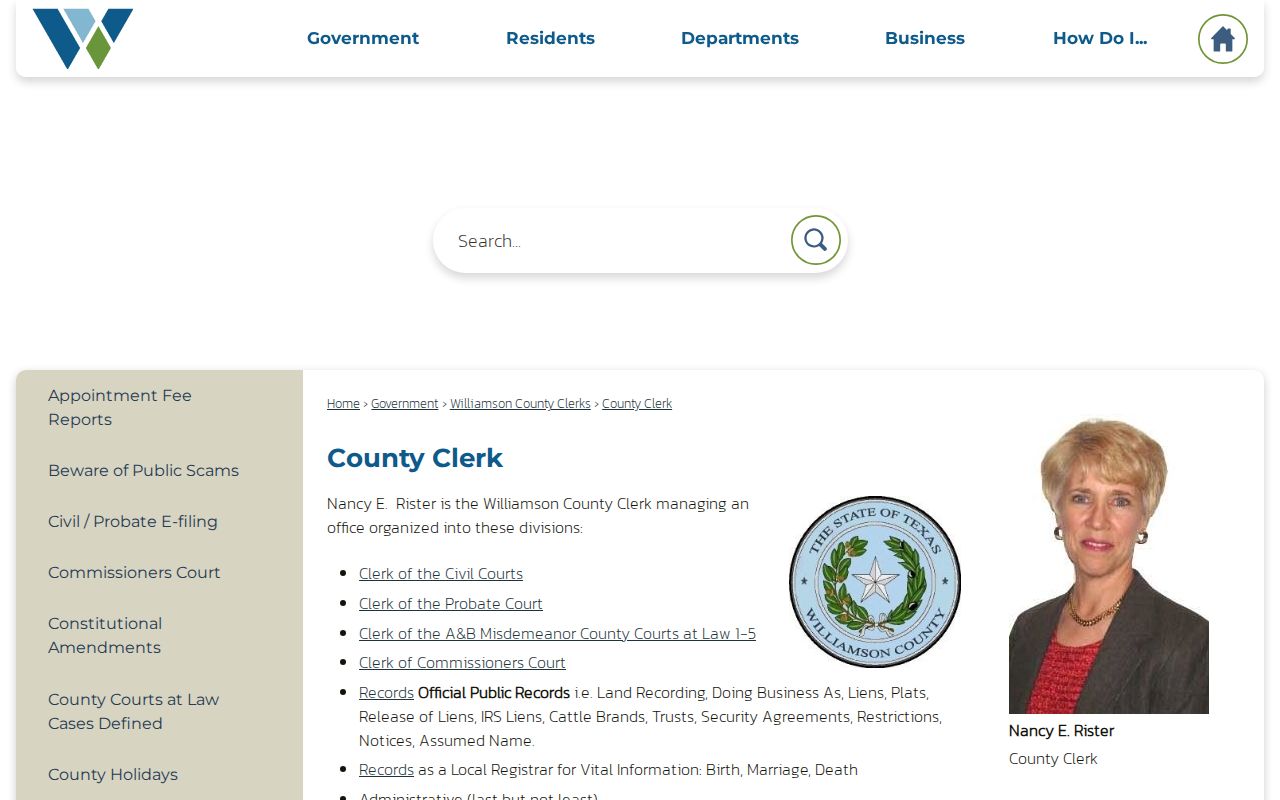
The office’s divisions matter because a land instrument, probate file, and vital-record request follow different access rules.
Brushy Creek Is Not a City
Brushy Creek is a CDP, not an incorporated city. That small jurisdiction detail changes a resident search. There is no universal Brushy Creek city clerk, municipal court, or city property-tax office. The county boundary profile places the community between Round Rock, Cedar Park, Leander, Georgetown, Austin, and Turkey Hollow. Start with the parcel and then identify the actual county, MUD, school, postal, and municipal layers that serve it.
A Round Rock postal address is not proof that Round Rock city departments hold a record. Round Rock permit, inspection, and public-information channels apply only after the address is confirmed inside city limits. For unincorporated locations, county GIS, county addressing, WCAD, the County Clerk, or the Brushy Creek MUD may be the more relevant source. The MUD’s neighborhood names are useful geographic labels, not household directories.
Note: Verify an edge address in the parcel map before sending a request to a city office.
WCAD Records for Brushy Creek
The WCAD basic property search accepts a name, address, or property identifier and displays result modes for Owner, Address, Account, and Property ID. Its Advanced Search adds address, ZIP, neighborhood, owner, business, property-type, legal-description, lot, block, and acreage controls. That makes it the strongest current property lead for Brushy Creek, but it still names an owner of record rather than proving who occupies the home.
| WCAD field | Use in a Brushy Creek search | Limit |
|---|---|---|
| Street number range and street name | Tests a full address or a portion of a street | Directional and suffix variants may be needed |
| ZIP code and city | Narrows a broad property search | Postal labels do not define CDP or city limits |
| Neighborhood | Connects a parcel to a subdivision label | Not every local label matches the legal subdivision field |
| Abstract, subdivision, block, tract, or lot | Bridges an address to the deed chain | Older instruments may lack the current street number |
Keep the situs address, mailing address, and legal description separate. The situs is the parcel’s physical location. A mailing address receives tax notices and can be elsewhere. The legal description, such as subdivision, block, and lot, is the stable key that carries the parcel into recorded documents. A parcel is the defined tract represented in appraisal and map systems.
The WCAD search screen shows the current property routes used to establish that initial parcel connection.
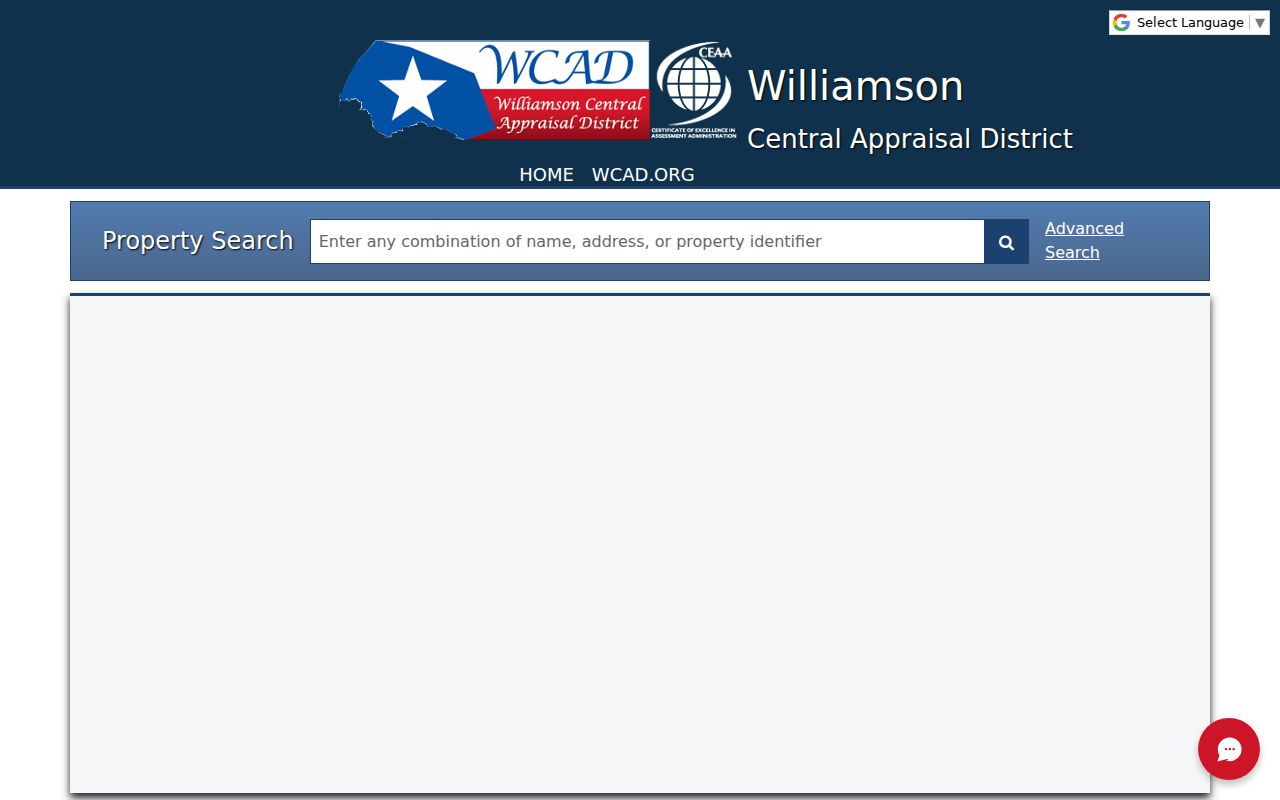
Once the result supplies a property key and legal description, recorded instruments can answer a different question about ownership history.
Brushy Creek Land Index Break
Williamson County has a clear historical handoff that matters for an address trail. The historical QuickLink route provides old Commissioners Court index books through December 30, 1983, or deed volumes 1 through 150. The county’s modern land-record system covers January 1984 forward. Neither boundary makes an older deed a resident list. It tells the researcher which index to use after the legal description and party names are known.
For still earlier work, the Texas State Library and Archives Commission lists Williamson County deed records from 1848 to 1908 and original deed indexes from 1835 to 1886. Direct indexes follow grantors and reverse indexes follow grantees. Save the volume, page, reel, recording date, party role, and legal description at every step. A later recording date can describe an earlier transaction.
The county’s records-portal page separates land and judicial search routes for current research.
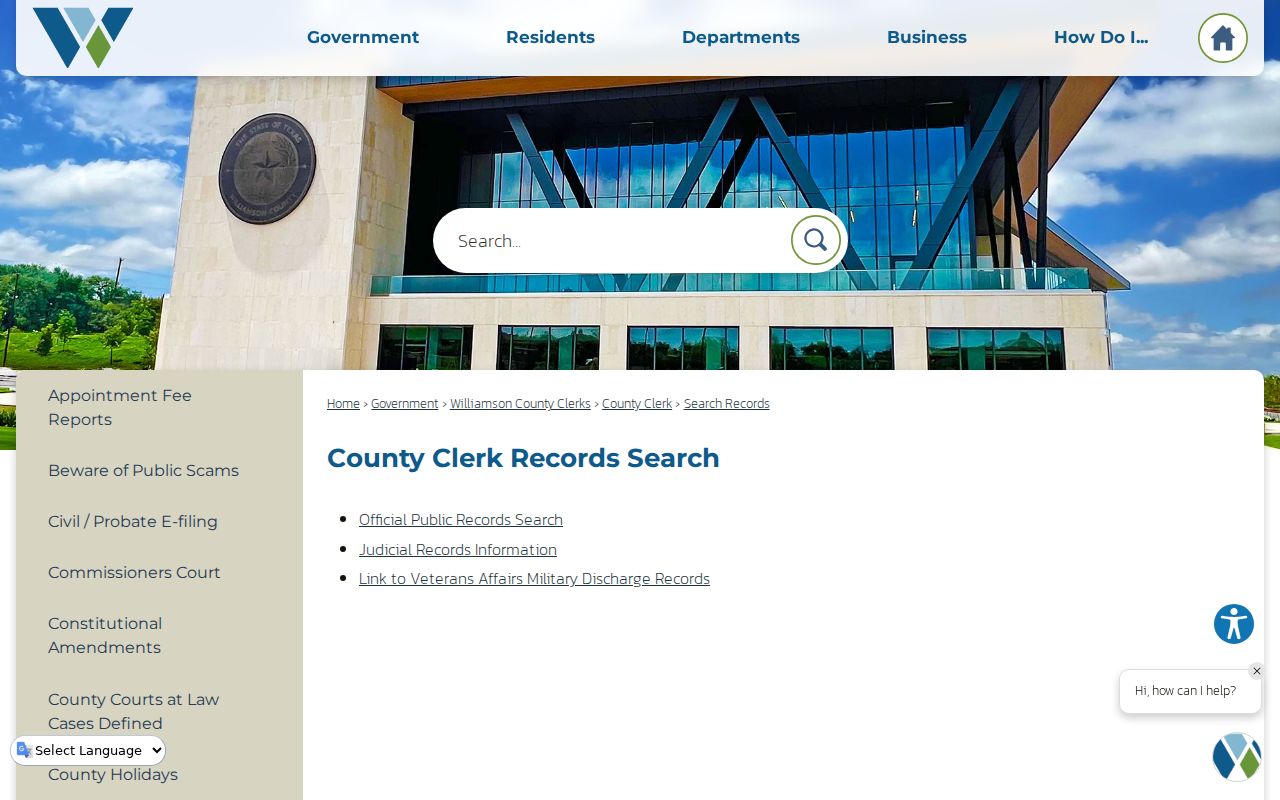
The portal split is a reminder to switch sources at the historical boundary instead of searching one index indefinitely.
Current Brushy Creek Resident Sources
A current source answers a narrow question. WCAD connects an owner to a property record. The land index identifies parties to an instrument. Election records can confirm registration information through the documented routes, subject to confidentiality. A court record can show a named party in a case. Each result needs a source label so that a property connection is not mistaken for an occupancy claim.
| Source | What it can show | Custodian | Access route |
|---|---|---|---|
| WCAD appraisal record | Owner of record, parcel, legal-description lead | WCAD | Free property portal |
| Recorded land index | Grantor, grantee, and instrument trail | Williamson County Clerk | Modern portal, QuickLink, counter, or archive |
| Voter information | Registration information under election rules | County and Texas elections offices | Official lookup or restricted file request |
| Judicial Records | Case, party, attorney, and calendar lead | County or District Clerk | Public index plus clerk-file route |
| Brushy Creek MUD neighborhood list | Community and association geography | Brushy Creek MUD | Official neighborhood page |
Use the Brushy Creek resident lookup approach when a single name needs corroboration across more than one official source. Do not combine matching surnames on a ZIP alone. Middle names, dates, parcel keys, case roles, or dated directory entries are stronger discriminators.
Brushy Creek Voter Routes
Texas My Voter Portal is the statewide official route. Williamson County training identifies three paths: name with county and date of birth, VUID with date of birth, or Texas driver license or ID with date of birth. The county also links its voter lookup from its lookups page. A search match is not a license to repeat a full address, and it does not establish that a person lives there now.
Voter data has distinct limits. Name, date of birth, and VUID have different public-access treatment from Social Security or driver-license information. Phone numbers are not copied in the ordinary voter-registration process. Some voters use protected-address programs, and the county opt-out form only suppresses web display rather than erasing an otherwise public record. For a lawful, narrowed public file, the Secretary of State uses a separate affidavit, deposit, and fee process.
The Texas My Voter Portal is the source for the current official interface.
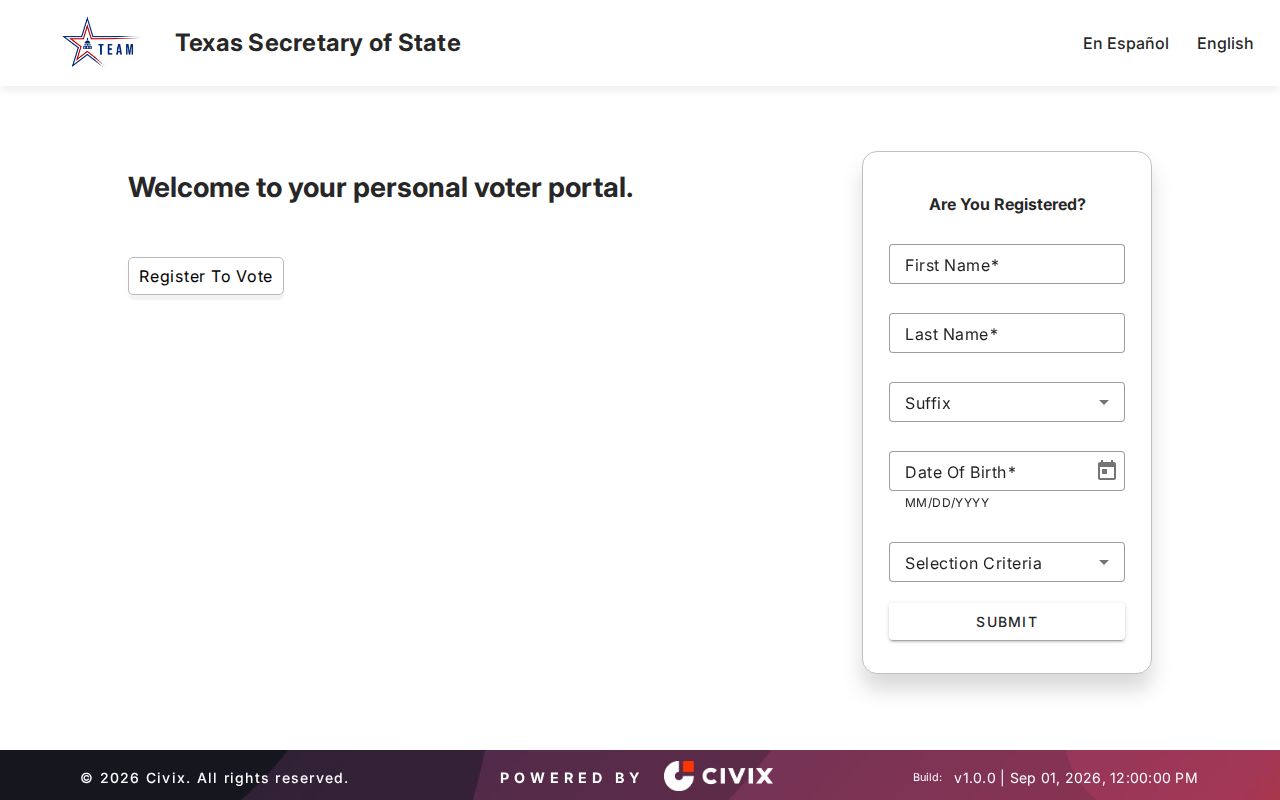
The documented identifier routes reduce false matches, but privacy protections still control what may be used or shared.
Brushy Creek Court and Vital Leads
The Williamson Judicial Records portal supports case, party, attorney, and calendar searches. Its help material describes name searching with Soundex or wildcard methods, but those methods should not be used together. A court index is a lead to a case file, not a finding about a person. Restricted cases and images may not open, and the appropriate County Clerk or District Clerk remains the custodian for official records.
Vital records follow another route. The County Clerk is the local registrar for county events, while Texas DSHS maintains statewide forms and verification paths. Marriage verification begins in 1966 and divorce verification in 1968. Birth records stay confidential for 75 years and death records for 25 years under Texas Government Code §552.115. A verification letter is not a certified marriage license or divorce decree.
The Judicial Records search identifies the local case-search route before a clerk-file request is needed.
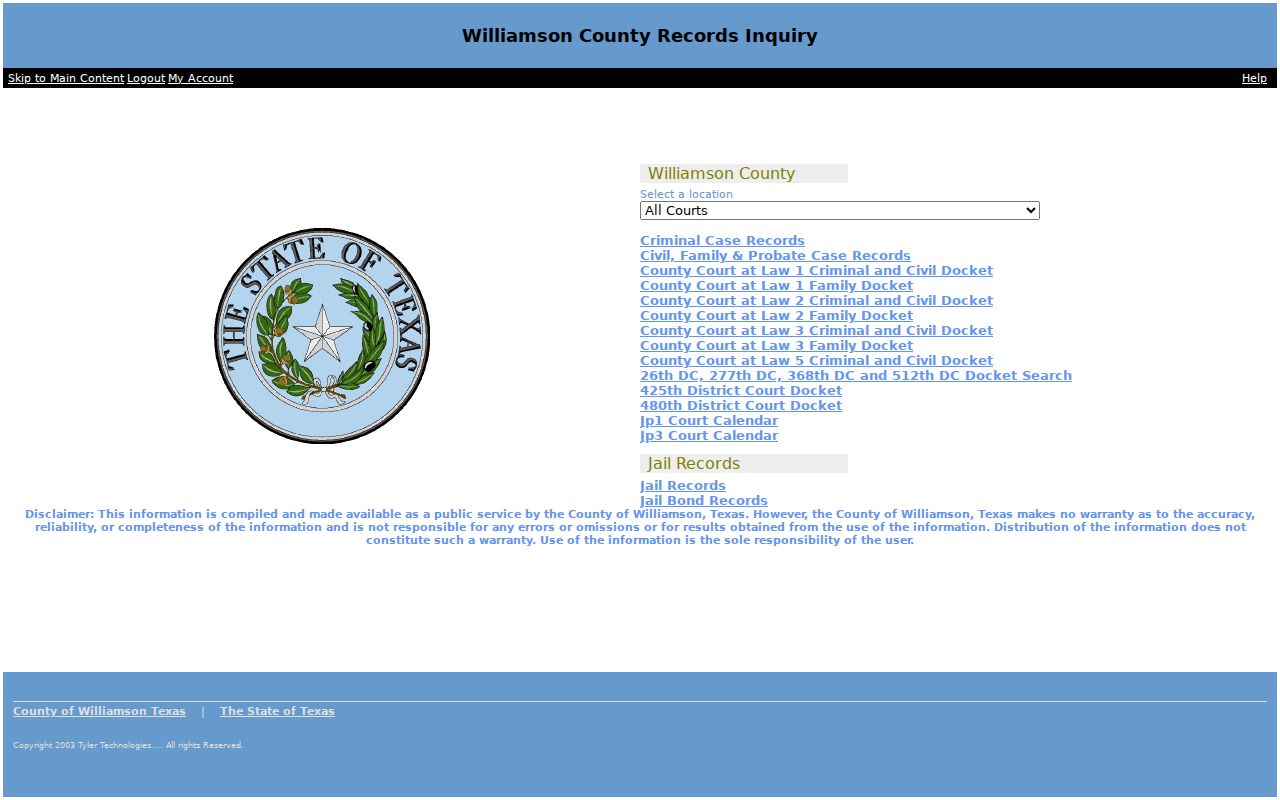
Use the case number, party role, and filing date to request the correct official file rather than relying on a name hit alone.
Brushy Creek ZIP Labels
Three Census ZIP Code Tabulation Areas intersect Brushy Creek geography: 78613, 78681, and 78717. They are geographic approximations, not a street-by-street postal promise. USPS assigns a delivery ZIP for an exact address, while WCAD and county GIS place a parcel in a different set of boundaries. That is why a mailing city, ZIP, CDP, and incorporated-city label can all differ without any record being wrong.
Use USPS to verify the mailing ZIP, County GIS to normalize the address, WCAD to find the parcel, and the county elections map for the current precinct. The county notes precinct changes effective January 1, 2026. ZIP is a useful filter in WCAD Advanced Search, especially alongside street range or neighborhood, but it is not proof that every matching record belongs in Brushy Creek.
Note: Treat the county’s 20,953 population figure and Census QuickFacts’ 22,519 figure as source-specific, not competing totals to average.
Historical Brushy Creek Directories
Historical research depends on a dated local collection, not a claimed all-years directory. Round Rock Public Library holds the Cole directory for greater Austin and vicinity for 1993, 1994, 1996, 1997, and 2001 through 2020. The verified run includes Round Rock and Williamson County, but an entry can be filed under a nearby postal place instead of Brushy Creek. No older Brushy Creek-specific printed directory run was located in the official sources.
For a household trail, search the known street, postal-city variants, surname spellings, and nearby cross streets in the actual volume. Record the year and page. A listing shows a time-stamped directory lead, not continuing residence or ownership. The fuller Brushy Creek city directory treatment covers the library shelf and its gaps.
Brushy Creek Library Evidence
The library adds materials that government indexes do not hold. Round Rock Leader microfilm covers 1929 through 2021, though coverage is brief from 1929 to 1974, complete from 1975 to 2005 except 1993, and incomplete after 2005. The genealogy collection also points to yearbooks, historical newspapers, Sanborn maps, HeritageHub, HeritageQuest, and in-library Ancestry Library Edition. A school yearbook or obituary can identify a person in time, but neither proves a current street address.
Williamson Museum, the Historical Commission sources notebooks, and the Portal to Texas History add photographs, dated metadata, scrapbooks, and county context. The museum’s scrapbook collection begins in 1948. These sources can explain an address or family connection that is missing from a record index. Keep the collection’s own gaps beside the finding.
The Round Rock Public Library local-history page explains the collections available for a dated search.
Note: A missing 1993 newspaper item and a 1993 Cole directory entry are not contradictory because the microfilm run has a known gap.
Brushy Creek Privacy Boundaries
Public access has source-specific limits. Courts use judicial-record procedures rather than a routine Texas Public Information Act request. Vital records have eligibility windows. Voter and protected-address records have statutory restrictions. County records can contain redactions even when an index is public. A missing or substitute address may be a deliberate privacy protection, not evidence that a person cannot be found.
Before repeating a name or address, remove Social Security numbers, complete identification numbers, financial-account data, protected addresses, and other restricted details. Texas also restricts motor-vehicle records through the federal Driver’s Privacy Protection Act. If a county record needs correction, contact the custodian with the supporting documentation instead of treating a search result as a personal profile.
Brushy Creek Request Fallbacks
When an online index ends, use the access channel that holds the record. A County Clerk counter or historical QuickLink and archive route can extend a deed search. The District Clerk request form supports electronic, mail, fax, and in-person requests for district files, while certified copies must be mailed or picked up. Texas DSHS forms support mail, online, and walk-in vital-record routes for eligible applicants. The library and Texas State Library and Archives Commission are the fallback for directories, newspapers, and microfilm.
For executive-branch or county material, a written Texas Public Information Act request should name the existing record, date range, location, and department. Courts are different: seek a judicial record through the clerk and applicable Rule 12 procedure. The request should ask for records, not ask staff to solve a research question. Confirm current fees, availability, and hours before paying or traveling.
The Texas DSHS Vital Statistics page is a starting point for current state forms and eligibility guidance.
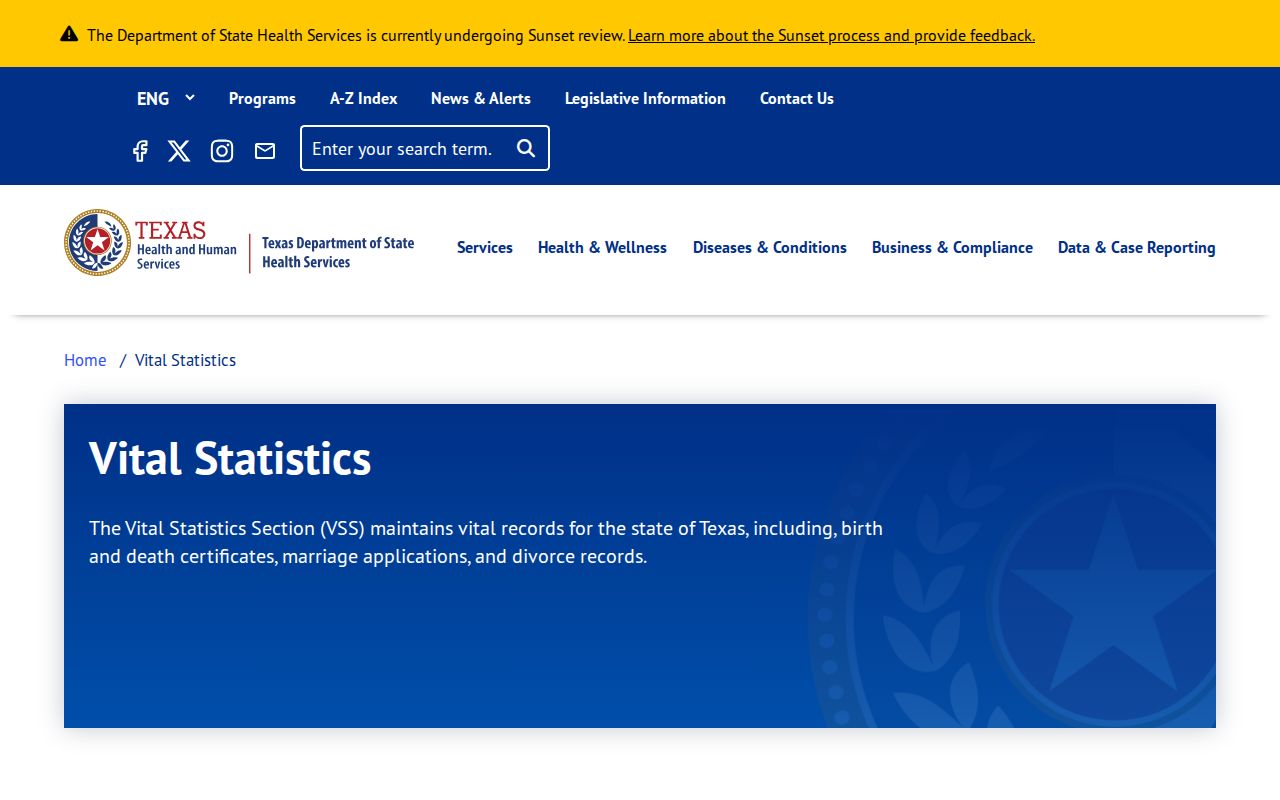
The state route complements, rather than replaces, the local registrar and clerk channels for an event held in Williamson County.